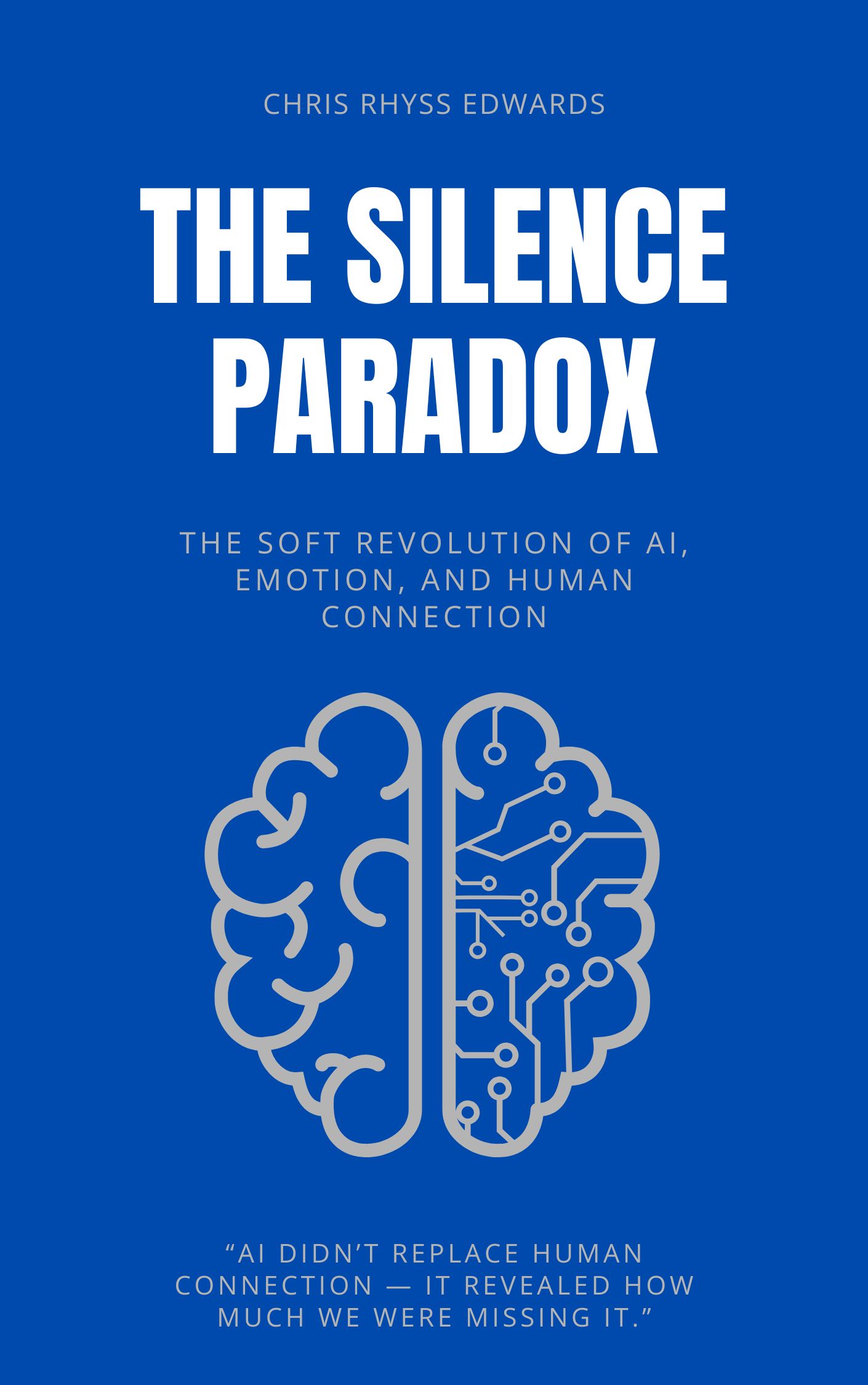
The Silence Paradox: New Book Examines Why People Are Confiding in AI When Humans Fall Silent

Brisbane, Queensland Jan 15, 2026 (Issuewire.com) - As AI chatbots quietly become a first line of emotional support for hundreds of millions of people worldwide, a new book, The Silence Paradox, explores a confronting question: why are so many people more willing to talk to machines than to other humans?
Written by Chris Rhyss Edwards, author of The Woke Paradox and a doctoral researcher investigating conversational AI and mental wellbeing, The Silence Paradox examines the explosive growth of AI-powered chatbots used for emotional support, self-reflection, and mental health conversations.
According to the World Health Organization, 1 in 8 people globally live with a mental disorder, yet the majority will never receive professional support due to stigma, cost, access, or fear of judgment. Into that silence, AI has stepped.
For the first time in history, the most private version of ourselves is being revealed not to another human, but to something incapable of feeling, Edwards says. People arent turning to AI because its better than humans, theyre turning to it because its available, non-judgmental, and doesnt make them feel like a burden.
Blending personal reflection, cultural analysis, and emerging research, The Silence Paradox explores:
- Why people disclose more deeply to chatbots than to friends, family, or clinicians
- How loneliness, shame, and social fragmentation fuel machine intimacy
- The psychological risks of emotional reliance on AI
- What responsible, ethical AI support should - and should not - replace
Edwards, a military veteran living with PTSD, brings lived experience to the work, openly reflecting on silence, masculinity, and the barriers that prevent people from seeking help.
This book isnt anti-AI, he explains. Its about what AI is revealing not about technology, but about us.
As governments, employers, and healthcare systems increasingly explore AI-based mental wellbeing tools, The Silence Paradox arrives at a critical moment, offering both a warning and a framework for thinking more carefully about the role machines are beginning to play in our emotional lives.
More On Inewsguru ::
- Atua AI Deploys Smart Workflow Tools to Optimize Protocol-Level Operations
- 78th Annual Arizona National Livestock Show
- Nottingham-based health consultancy launches report on the future of NHS technology
- The Art of Living Signs Strategic MoU with Permanent Secretariat of the World Summit of Nobel Peace Laureates
- Predictiva Partners with Ento Capital to Launch Ethical AI Portfolio, After Two Years of Live Trading and 52% Net Return
The Silence Paradox is available now.
Media enquiries, review copies, and interviews via the contact details below.
About the Author
Chris Rhyss Edwards is a writer, doctoral researcher, and former soldier exploring what happens when people have no one left to talk to. A military veteran living with PTSD, he studies the growing role of AI chatbots in mental wellbeing and emotional support. His work blends lived experience, research, and cultural critique to ask difficult questions about silence, connection, and the future of care.
Media Contact:
Chris Rhyss Edwards
Author & Doctoral Researcher
Email: [email protected]
Phone: +61 425 478 533
Website: https://chrisrhyss.co
Source :FOLQ
This article was originally published by IssueWire. Read the original article here.